

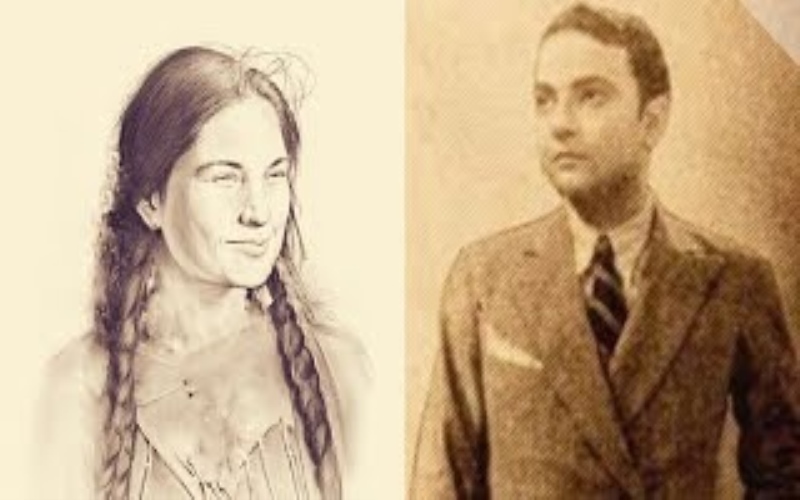
Dhiraj Bhattacharya stands as one of the most significant and pioneering figures in Bengali theatre and cinema. With an enduring legacy of creativity, social consciousness, and artistic innovation, he revolutionized the Bengali cultural landscape through his multi-faceted career as a playwright, director, and actor. His work in both theatre and cinema continues to inspire generations of artists and thinkers, ensuring that his name remains synonymous with the modernist ethos of Bengali cultural expression.
Dhiraj Bhattacharya journey as an artist unfolded during a period of immense political and social change in Bengal. His career was deeply interwoven with the struggles of post-independence India, as well as the evolving nature of Bengali identity in a rapidly changing world. Whether through his groundbreaking plays, his involvement in the revolutionary IPTA (Indian People’s Theatre Association), or his contributions to Bengali cinema, Bhattacharya’s work transcended the traditional boundaries of art. He demonstrated an unyielding commitment to social justice, intellectual rigor, and artistic integrity, becoming a bridge between the political and the artistic spheres.
Early Life and Background
Dhiraj Bhattacharya was born in the year 1923 in the vibrant city of Kolkata (then Calcutta), which at the time was one of the cultural and intellectual capitals of British India. He grew up in an environment that was rife with the ideas of social reform, cultural renaissance, and political activism. Kolkata, as the epicenter of the Bengali Renaissance, was home to some of the most influential thinkers, writers, and artists of the 19th and early 20th centuries. In this context, Bhattacharya’s early exposure to the world of literature, theatre, and politics played a pivotal role in shaping his later works.
Bhattacharya was educated at the prestigious Presidency College in Kolkata, where he studied subjects that were to influence his artistic journey, particularly the social sciences, literature, and the humanities. His intellectual formation during this time exposed him to a wide range of revolutionary and progressive ideas, which had a profound impact on his understanding of art and its potential for societal transformation. The political climate of the time—marked by the anti-colonial struggle, the fight for independence, and the rise of leftist ideologies—further fueled Bhattacharya’s desire to engage with art in a socially responsible way.
Though not immediately involved in the field of theatre or cinema, Bhattacharya’s intellectual pursuits and his growing interest in political activism naturally led him to the world of drama and performance. In the early 1940s, when India was on the cusp of independence, theatre in Bengal was undergoing a profound shift toward realism and political consciousness, and Bhattacharya was quick to be swept up in this movement.
Entry into Bengali Theatre
Bengali theatre in the early 20th century was heavily influenced by the works of Rabindranath Tagore, the neo-Romanticists, and the classical traditions. However, by the 1930s and 1940s, a shift toward realism began to take place. Theatre began to serve as a medium not just for entertainment, but for social change, political critique, and intellectual reflection. At the heart of this new wave was the Indian People’s Theatre Association (IPTA), a revolutionary theatre group that was founded in 1943. The IPTA’s mission was to produce theatre that was socially relevant and politically charged, utilizing the stage as a tool for mass education and agitation.
Dhiraj Bhattacharya, who was deeply inspired by this mission, became an active member of the IPTA and quickly made his mark as a playwright and director. The group was a breeding ground for intellectuals and artists who were committed to the ideas of Marxism, socialism, and social justice, and Bhattacharya found in this movement a natural outlet for his creativity and social concerns.
His plays were distinguished by their focus on the struggles of the working class, the exploitation of the marginalized, and the contradictions inherent in a society transitioning from colonialism to independence. Bhattacharya’s involvement with IPTA led to a series of critically acclaimed works that were socially engaged, theatrical innovations.
One of his most notable early plays was *Poth Paren* (The Road is Open), which dealt with the themes of poverty, alienation, and the search for a new social order. In *Poth Paren*, Bhattacharya explored the psychological and emotional toll that the social and economic inequities of the time had on the individual. The play was a powerful reflection of the psychological dislocation and identity crisis faced by many in the face of colonialism, poverty, and political upheaval.
A New Approach to Theatre: Social Realism and Political Theatre
Dhiraj Bhattacharya theatre was grounded in the tradition of social realism, but he also had a unique ability to blend this with powerful emotional narratives and a deep understanding of human psychology. His plays were not simply political statements or overtly propagandistic pieces; they were rich, nuanced stories about the human condition. Whether dealing with the struggles of the working class or the conflicts within the intellectual elite, his characters were complex, multi-dimensional, and deeply human.
One of Bhattacharya’s trademarks was his ability to balance the theoretical with the practical. His plays were not only engaging intellectual exercises but were also filled with emotional depth, making them accessible to a wide audience. He was particularly skilled in depicting the lives of ordinary people—workers, farmers, and the oppressed—showing their internal conflicts and struggles with social and economic systems.
Perhaps the best example of this blending of political and emotional realism is Bhattacharya’s play *Raatrir Pahar* (The Night Shift), a powerful exploration of the lives of factory workers who, despite their hard labor, remain trapped in cycles of poverty and exploitation. Through his portrayal of their collective struggles, Bhattacharya humanized the issue of class struggle, making it more than just an ideological battle, but a deeply emotional one. The play became emblematic of his vision of theatre as a means of not just educating the audience but also emotionally engaging them with the realities of everyday life.

Through his work, Bhattacharya sought to reform the very language of Bengali theatre. He abandoned the melodramatic forms of the past in favor of naturalistic performances that portrayed life as it was. His plays broke from the conventions of the “well-made play” and embraced a more open, experimental approach that explored issues like class struggle, national identity, and personal crisis. It was not just the subject matter that made Bhattacharya’s work revolutionary, but also his theatrical techniques. His experiments with minimalist staging, symbolic lighting, and disjointed narrative structures set him apart from his contemporaries, and laid the groundwork for future generations of theatre artists to explore new forms of theatrical expression.
Transition to Cinema: Expanding the Scope of his Vision
While Celebrity Bhattacharya’s theatrical work was groundbreaking, his influence extended beyond the stage. As Bengali cinema entered a new phase in the post-independence era, with filmmakers like Satyajit Ray, Ritwik Ghatak, and Mrinal Sen pushing the boundaries of film as an art form, Bhattacharya, too, ventured into the world of cinema. His move to filmmaking was a natural extension of his interest in exploring social issues and his belief in the power of mass media to bring about social change.
In the late 1950s and early 1960s, when the Indian cinema industry was still dominated by escapist films and melodramatic storylines, Bhattacharya emerged as a powerful voice advocating for realistic, socially conscious cinema. Like his theatrical work, Bhattacharya’s films delved into the struggles of the common people, portraying their day-to-day lives with an unflinching eye. His films explored the complexities of class, gender, and identity, while also capturing the anxieties of post-colonial India.
One of his notable works as a filmmaker was *Uttarayan* (The Northern Winds), which dealt with the political and economic struggles of the common man. The film, much like his plays, portrayed the tensions between personal desires and social obligation, and it became a major success not only for its critical acclaim but for its honest and stark portrayal of everyday life in India.
In his transition from theatre to cinema, Dhiraj Bhattacharya brought with him the same revolutionary approach to storytelling that defined his stage work. The same themes of class struggle, economic hardship, and human resilience were explored through the lens of film, utilizing cinematic techniques such as close-up shots, non-linear narrative structures, and stark contrasts in lighting to intensify the emotional impact.
A Lasting Influence: Legacy and Impact on Bengali Art
Dhiraj Bhattacharya’s legacy is one of far-reaching significance. As a playwright, director, and filmmaker, he shaped the direction of Bengali theatre and cinema in the 20th century, helping both art forms evolve from traditional, colonial influences into a modern, progressive, and socially engaged medium. His work influenced not just his contemporaries but also subsequent generations of artists who found in Bhattacharya a role model for how art could be used as a force for change.
Beyond his artistic contributions, Bhattacharya was also a mentor to many young artists, encouraging them to view theatre and cinema not as passive entertainment but as a tool for raising consciousness, reflecting societal realities, and challenging the status quo. His influence extended across genres, and his ability to move between different forms of art—stage and screen—set him apart from many of his peers.
In a broader sense, Dhiraj Bhattacharya’s work was part of a larger movement within Bengali intellectual circles, in which art and politics were deeply intertwined. His involvement with the IPTA, his advocacy for leftist ideals, and his focus on humanism and social justice made him an important figure in the cultural renaissance of post-independence Bengal. Bhattacharya’s work was also important in defining the modern Bengali identity, as it engaged with both the pain of the past and the hopes for a more just future.
Dhiraj Bhattacharya passed away in 1991, but his legacy continues to resonate through the vibrant cultural life of Bengal. Today, he is remembered as a pioneer who helped shape the artistic landscape of modern Bengali theatre and cinema. His plays and films are still studied and performed, and his philosophy of socially committed art remains relevant in contemporary discussions about the role of the artist in society.
As both a creator and a thinker, Dhiraj Bhattacharya remains a monumental figure in the history of Bengali art, a testament to the power of creativity and the enduring potential of theatre and cinema to inspire change.
