

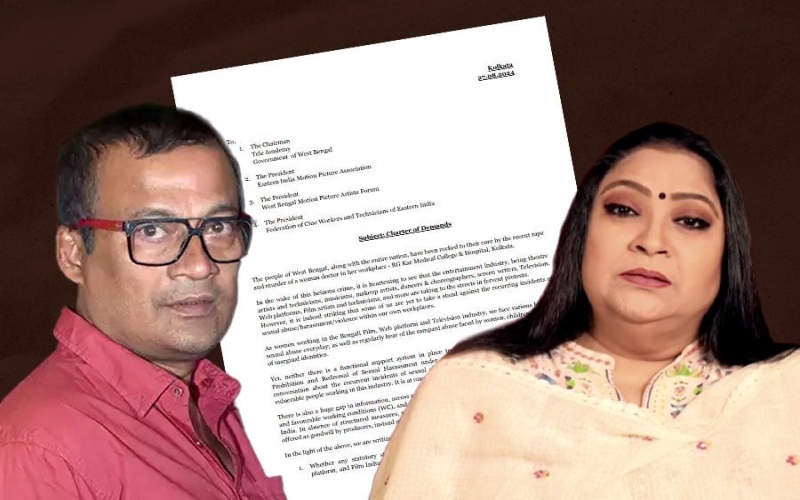
Piya Sengupta, a name that may not immediately ring bells for many, has established herself as a talented and versatile actress in the world of Indian cinema. Known for her work across multiple regional film industries, including Bengali, Hindi, and even Tamil, Piya’s career trajectory is one of quiet persistence, marked by diverse roles and a deep commitment to her craft. Though she is not one of the most mainstream or widely recognized actresses, her body of work and the appreciation she has garnered in niche circles make her a notable figure in the Indian entertainment industry.
From her early days as a child artist to her rise as an adult actress, Piya Sengupta has navigated through various genres, taking on roles that demanded both acting prowess and emotional depth. In this article, we will explore the life, career, and evolving journey of Piya Sengupta—her early life, her rise in the entertainment industry, her significant works, challenges, and the impact she has made on regional cinema.
Early Life and Background
Piya Sengupta was born on December 17, 1977, in Kolkata, West Bengal, into a middle-class family with a rich cultural background. Growing up in Kolkata, Piya was exposed to the world of arts and culture from an early age. Her family, though not directly involved in the entertainment industry, held a deep appreciation for the fine arts, and this influence undoubtedly shaped Piya’s early interests.
Piya completed her schooling in Kolkata, and from a young age, she was involved in various extracurricular activities, including acting in school plays and participating in cultural events. She developed an interest in performing arts early on, and by her teenage years, she had already decided to pursue a career in acting. While she was still in college, Piya began to actively look for opportunities in the entertainment industry.

Initially, Piya worked in theater productions in Kolkata, gaining hands-on experience and exposure to live performances. This foundation in theater helped Piya hone her skills in dialogue delivery, emotional range, and character building—skills that would later help her in her film career. Piya’s experience in theater also instilled in her a sense of discipline, professionalism, and the ability to adapt to diverse acting environments. It is said that she has always been someone who values hard work and dedication to her craft, which would become the cornerstone of her career.
Breakthrough in Regional Cinema
Piya Sengupta’s entry into the film industry was gradual. Like many aspiring actors, her initial foray into cinema was through supporting roles, before she gained more substantial parts in later years. Piya’s first notable film role came in 1998 when she appeared in the Bengali film “Chandni Bar”, directed by the well-known filmmaker Tapan Saha. While the film did not give her an overwhelming amount of screen time, it was a turning point for the actress. This marked the beginning of Piya’s professional journey in the Bengali film industry.
Despite the modest start, Piya’s natural acting ability began to shine through, and she quickly established herself as a promising actress within the regional cinema circuit. She was particularly appreciated for her portrayal of roles that were more grounded, and often more complex, than the typical glamorous parts that many actresses of her generation were offered.
As Piya Sengupta’s career in Bengali cinema flourished, she began to appear in a variety of roles that showcased her versatility. She was often seen playing characters that were emotionally complex and required her to portray nuanced performances. Some of her early films that garnered attention included “Pather Sathi” (1999), “Basu Paribar” (2003), and “Dadar Kirti” (2004). In these films, Piya demonstrated her ability to embody both strength and vulnerability, handling the emotional weight of her roles with ease.
Her work in Bengali cinema earned her several nominations and awards, making her a prominent figure in the Bengali film industry. Yet, despite the accolades, Piya continued to remain relatively low-key, preferring to focus more on her craft rather than seeking out the limelight. This made her a more respected figure among filmmakers and peers, rather than a celebrity in the traditional sense.
Versatility Across Genres: Bengali, Hindi, and Beyond
Though Piya Sengupta is best known for her work in Bengali cinema, her talent transcended regional boundaries, allowing her to take on roles in multiple languages, including Hindi, Tamil, and Telugu. This versatility demonstrated Piya’s adaptability as an actress and her ability to perform in different linguistic and cultural contexts.
In Hindi cinema, Piya’s roles were often limited to supporting characters or ensemble casts, but she nonetheless left a lasting impression in the few films she worked on. One of her more notable appearances was in the 2004 film “Ab Tumhare Hawale Watan Saathiyon”, a Bollywood film directed by Anil Sharma. Though the film didn’t achieve major success, Piya’s performance as a supporting character was recognized by critics. She also appeared in the television serial “Kumkum” in 2005, where she was seen in a positive, family-oriented role, contrasting sharply with the more intense characters she had portrayed in Bengali films.
In Tamil cinema, Piya Sengupta’s career was comparatively shorter, but she made her presence felt with her performance in the film “Chidambara Rahasya” (2014). A mystery-comedy film that also dealt with themes of family and inheritance, Piya played a key supporting role that added depth and texture to the narrative. Though her work in Tamil cinema was not as extensive as in Bengali films, it helped establish her as a pan-Indian actress with the ability to cross over to different film industries.
Her work in Telugu cinema was limited, but like her ventures into Hindi and Tamil films, Piya approached the roles with seriousness and diligence, making a mark in the few regional films she appeared in.

What stood out about Piya Sengupta was her ability to make each role her own, irrespective of the language or genre. Whether playing a serious, dramatic character or taking on lighter roles in comedies, Piya brought a certain warmth and authenticity to her performances. She did not need to rely on the conventional tropes of glamour to make an impact; her performances were rooted in emotion and a deep understanding of her characters’ inner worlds.
Significant Films and Key Roles
Piya Sengupta’s career continued to evolve as she took on a wide range of roles that showcased her ability to adapt to any character, whether it was in a romantic drama, a thriller, or a family-oriented film. Some of her key films that shaped her career include:
– “Chandni Bar” (2001) – While not a mainstream success, Piya’s role in this Bengali film was appreciated for its emotional depth. The film’s exploration of familial relationships and the struggles of the common man helped Piya establish her reputation as a serious actress in the Bengali film industry.
– “Pather Sathi” (1999) – This film, which is still considered one of the standout performances of Piya Sengupta’s early career, was a classic in Bengali cinema. Piya’s portrayal of a young woman caught between tradition and modernity helped her gain a loyal fan base, particularly in the Bengali-speaking regions.
– “Basu Paribar” (2003) – A drama film that delved into familial bonds and generational differences, Piya’s performance in this film was lauded for its depth. The film explored the emotional complexities of family life and featured a stellar cast, with Piya being a standout in the ensemble.
– “Chidambara Rahasya” (2014) – In this Tamil-language film, Piya portrayed a character that brought a mix of mystery and comedy to the film. Although the film was not a massive hit, Piya’s role added a significant layer to the storyline, showcasing her ability to tackle different genres.
– “Ab Tumhare Hawale Watan Saathiyon” (2004) – Piya’s brief but impactful role in this Bollywood film was one of her forays into the Hindi film industry. Her presence in the ensemble cast, though not central, was widely appreciated.
Though Piya’s career has been marked by a series of well-executed supporting roles, what stands out about her work is the diversity of her roles. She has not been confined to one genre or one type of character but has instead explored the vast spectrum of human emotions and relationships, from innocent and romantic to tragic and intense.
Challenges in the Industry
Like many actresses, Piya Sengupta’s career has not been without its challenges. While she gained recognition in regional cinema, her transition to the Hindi film industry was not as smooth as she might have hoped. The competitive nature of Bollywood, coupled with the industry’s tendency to favor glamour over substance, meant that Piya’s more understated approach to acting didn’t always receive the recognition it deserved in the commercial sphere.
Piya also faced the typical challenges of being a regional actress in the larger Indian film industry. While Bollywood often prioritizes actors with mass appeal, regional cinema has allowed Piya to maintain her integrity as an artist, staying true to roles that require emotional depth and complexity. However, she has always maintained that she prefers being part of projects where the content is strong and the role offers something unique to her as an actress.
Personal Life and Public Image
Piya Sengupta is known to be a private person who prefers to keep her personal life away from the public eye. Unlike many of her contemporaries, she does not indulge in social media attention or the typical celebrity lifestyle. Her quiet demeanor and professional focus have earned her the respect of fellow actors and filmmakers
She is also known for being a committed family person. While there is not much information available about her personal life, it is evident that Piya has always prioritized her craft over the spotlight.
Conclusion: A Legacy of Versatility
Piya Sengupta may not be the most widely recognized actress in mainstream Indian cinema, but she is a shining example of talent, versatility, and resilience. Throughout her career, she has proven that acting is not just about stardom but about making meaningful contributions to storytelling, regardless of the size of the role or the scale of the project.
Her work across multiple languages, her ability to take on a wide range of characters, and her dedication to her craft have made her an unsung gem in Indian cinema. Though she may not always grab the headlines, her body of work speaks volumes about her commitment to the art of acting. As a performer, Piya Sengupta has established a legacy of understated elegance, emotional depth, and quiet strength. She is proof that, in the world of cinema, it is often the most subtle and nuanced performances that leave the deepest impact.
