


Shaoli Mitra, an acclaimed actress, director, and playwright, has made significant contributions to Bengali theater and cultural heritage. Known for her powerful performances, innovative storytelling, and deep-rooted passion for Bengali culture, Shaoli Mitra has continued the legacy of her legendary parents, Sombhu Mitra and Tripti Mitra, two pillars of Indian theater. This article explores Shaoli Mitra’s life, her career, and the lasting impact she has had on the arts and society.
Early Life and Cultural Background of Shaoli Mitra
Born into a family that lived and breathed theater, Shaoli Mitra was destined for a career on stage. Her father, Sombhu Mitra, was a celebrated theater director and playwright, and her mother, Tripti Mitra, was a legendary actress known for her intense and realistic portrayals. Growing up in an environment filled with art, culture, and revolutionary ideas, Shaoli Mitra developed a profound respect for theater and storytelling from an early age. This cultural immersion deeply influenced her creative instincts and would later shape her approach to acting and direction.
The influence of her parents on Shaoli Mitra was profound, yet she carved her own unique path in the world of theater. Unlike her parents, who focused on adapting Western plays into Bengali, Shaoli Mitra was drawn to indigenous stories that resonated with Bengali audiences on a personal level. Her focus on Bengali folklore, history, and mythology became her signature, and she created a distinct identity for herself in the theater world.
Shaoli Mitra’s Journey in Theater: A Legacy Redefined
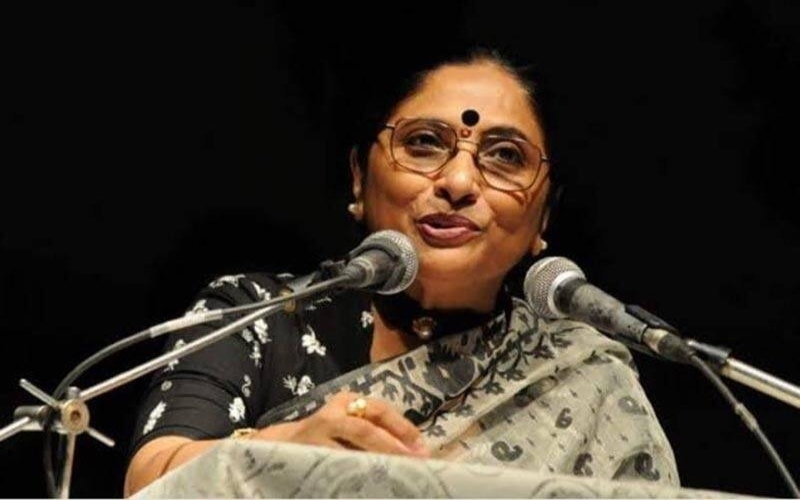
Shaoli Mitra’s career is defined by her powerful solo performances, where she often portrayed strong female characters that resonated with audiences. Her dedication to theater as a medium of social change and cultural expression set her apart as an artist who wasn’t afraid to challenge the status quo. Among her most acclaimed performances is Nathabati Anathbat, a monodrama where Shaoli Mitra depicted Draupadi from the Mahabharata, reinterpreting the character from a feminist perspective. This play captivated audiences and earned her accolades for its emotionally charged and socially relevant portrayal of Draupadi’s struggles.
In Nathabati Anathbat, Shaoli Mitra brought Draupadi’s story to life in a way that was both modern and timeless, combining classical text with contemporary social critique. The play emphasized her ability to connect deeply with her audience, as she used the stage to express the complexities of gender, power, and identity. Through this performance, Shaoli Mitra demonstrated her commitment to presenting women’s stories with dignity and depth, making her a pioneer in feminist theater.
Another remarkable work by Shaoli Mitra is Sitakatha, in which she explored the life of Sita, a character from the Ramayana. In her reinterpretation, Sita’s story was told from her own perspective, exploring her sacrifices, strength, and resilience. With this play, Shaoli Mitra challenged traditional narratives, encouraging audiences to rethink their perception of mythological characters and highlighting the timeless relevance of these stories. Sitakatha showcased her ability to reinterpret classical texts and present them in a way that resonates with contemporary issues.
Shaoli Mitra’s Impact on Bengali Theater and Society
Shaoli Mitra’s contribution to Bengali theater goes beyond her performances; her work has become a cultural movement. Through her unique approach to storytelling, she has brought attention to social issues such as gender inequality, caste, and societal injustice. Her plays are often filled with nuanced social commentary, prompting audiences to reflect on the deeper issues facing society. Shaoli Mitra’s emphasis on indigenous narratives and her reinterpretation of female characters have inspired a new generation of theater enthusiasts to look within their own culture for inspiration.
In addition to her work as an actress and playwright, Shaoli Mitra has made significant contributions to theater as a director and producer. She has worked tirelessly to promote Bengali theater, ensuring its preservation and growth. As the president of the Paschim Banga Natya Akademi, she has supported various initiatives to promote theater in West Bengal, particularly focusing on traditional and folk forms of theater. Shaoli Mitra’s leadership has been instrumental in fostering a supportive environment for young artists and in promoting the rich heritage of Bengali theater to wider audiences.
Shaoli Mitra’s commitment to her craft has not only enriched Bengali theater but also created a sense of pride in Bengali culture. Her dedication to presenting Bengali folklore, history, and mythology on stage has reinforced a sense of cultural identity among audiences. Through her work, Shaoli Mitra has encouraged people to reconnect with their heritage and appreciate the depth and beauty of Bengali literature and folklore.
The Feminist Icon: Shaoli Mitra’s Portrayal of Strong Women
Shaoli Mitra is celebrated not only as a talented actress but also as a feminist icon. Her portrayal of female characters like Draupadi and Sita has resonated deeply with audiences, as these roles highlight the resilience, intelligence, and strength of women. Shaoli Mitra’s feminist reinterpretations have been groundbreaking, as they give voice to characters who have historically been marginalized or misunderstood. Her work has inspired countless women to embrace their identities and has sparked important conversations about gender and representation.
Through her portrayal of Draupadi in Nathabati Anathbat, Shaoli Mitra emphasized the strength and dignity of women, challenging traditional narratives that often portray women as passive or submissive. Similarly, her portrayal of Sita in Sitakatha presented a nuanced perspective of Sita as a complex and empowered character, encouraging audiences to view her story through a feminist lens. These performances have been instrumental in redefining the portrayal of female characters in Bengali theater, making Shaoli Mitra a trailblazer in feminist theater.
Awards and Recognition for Shaoli Mitra’s Contributions
Shaoli Mitra’s contributions to theater have been recognized with numerous awards and accolades. She has received several prestigious awards, including the Sangeet Natak Akademi Award, one of the highest honors in Indian performing arts, for her outstanding contribution to theater. Shaoli Mitra’s work has also been acknowledged internationally, as her plays have been performed and appreciated by audiences around the world.
Despite her numerous accolades, Shaoli Mitra remains humble and dedicated to her craft. She has often expressed that her true reward lies in the impact her work has on audiences and in the preservation of Bengali theater. Her passion and dedication have made her an inspiration to countless aspiring artists, and her legacy will continue to influence generations to come.
Shaoli Mitra’s Vision for the Future of Theater

Shaoli Mitra’s vision for the future of theater is deeply rooted in her love for Bengali culture and her belief in the power of storytelling. She envisions a future where theater continues to be a medium for social change and cultural preservation. Shaoli Mitra hopes to inspire more artists to explore indigenous narratives and to create works that reflect the values and struggles of their own communities. Her dedication to promoting Bengali theater has already set the stage for a new generation of artists who are committed to preserving and advancing this rich tradition.
As a cultural leader, Shaoli Mitra continues to mentor young artists, encouraging them to approach theater with authenticity and passion. She believes that theater should not only entertain but also challenge, inspire, and educate. Her vision for the future of theater is one where artists embrace their cultural heritage and use their craft to create meaningful change in society.
Read More Bio About: Debika Mitra
Shaoli Mitra’s Legacy: An Inspiration for Future Generations
Shaoli Mitra’s life and work are a testament to the transformative power of theater. Her dedication to Bengali culture, her commitment to social change, and her advocacy for gender equality have left an indelible mark on Indian theater. Shaoli Mitra’s legacy is not only in her remarkable body of work but also in the inspiration she has provided to countless individuals who aspire to make a difference in the world.
Shaoli Mitra’s story serves as a reminder of the importance of staying true to one’s roots while also embracing innovation and progress. Her work has shown that storytelling is a powerful tool for social change and that the stories we tell can shape our understanding of the world. As a pioneer in Bengali theater, Shaoli Mitra has created a legacy that will continue to inspire, educate, and empower future generations.
In a world that is constantly changing, Shaoli Mitra’s commitment to preserving cultural heritage and promoting social justice is more relevant than ever. Her work serves as a beacon of hope, reminding us that art has the power to transform society and that each of us has the ability to create positive change. Shaoli Mitra’s legacy is one of resilience, courage, and an unwavering belief in the power of theater to make a difference.
Through her life and work, Shaoli Mitra has shown that theater is not just a form of entertainment but a force for change and a means of preserving cultural identity. Her story is one of dedication, passion, and an unyielding commitment to her craft. As she continues to inspire new generations of artists, Shaoli Mitra’s legacy will remain a guiding light for those who seek to make a difference through the arts.
