

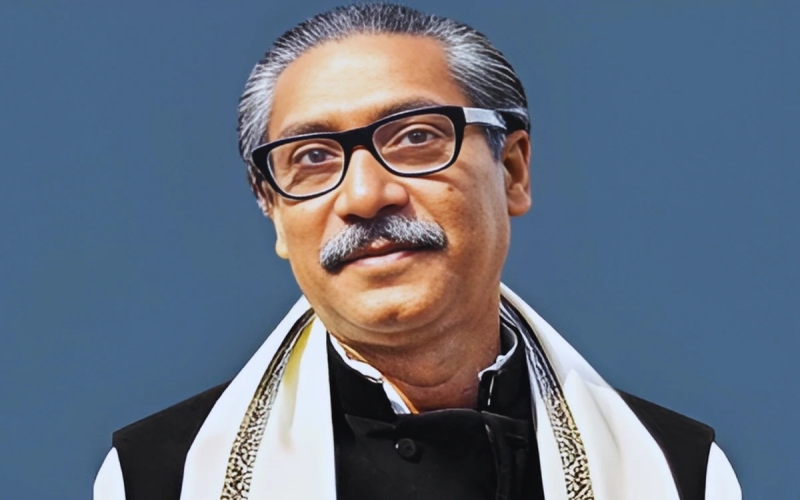
Sheikh Mujibur Rahman, widely regarded as the Father of the Nation of Bangladesh, was a towering figure in global history. He played a pivotal role in the independence movement of Bangladesh, steering the country from the oppression of West Pakistan to a free and sovereign state. Born on 17 March 1920, in Tungipara, a small village in what was then Bengal in British India, Sheikh Mujibur Rahman’s life is an extraordinary tale of dedication, sacrifice, and political acumen.
This article delves deep into the life of Sheikh Mujibur Rahman, exploring his personal and political journey, and analyzing his legacy, achievements, and symbolic net worth.
Personal Details of Sheikh Mujibur Rahman
Below is a detailed table summarizing Sheikh Mujibur Rahman’s personal information:
| Attribute | Details |
| Full Name | Sheikh Mujibur Rahman |
| Date of Birth | 17 March 1920 |
| Place of Birth | Tungipara, Gopalganj, Bengal Presidency, British India |
| Date of Death | 15 August 1975 |
| Age at Death | 55 |
| Place of Death | Dhaka, Bangladesh |
| Occupation | Politician, Prime Minister, President |
| Height | Approx. 5 feet 11 inches (180 cm) |
| Weight | Approx. 75 kg (165 lbs) |
| Net Worth | Symbolic; his legacy is invaluable |
| Known For | Founding Father of Bangladesh |
Early Life and Education
Sheikh Mujibur Rahman was born into a middle-class family in Tungipara, Gopalganj District. His father, Sheikh Lutfur Rahman, worked as a serestadar (clerk) in the civil court of Gopalganj, and his mother, Sayera Khatun, was a homemaker. Mujibur Rahman was the third of six children.
From an early age, Sheikh Mujib showed signs of leadership and a strong sense of justice. His education began in Gopalganj, and he later moved to Kolkata to pursue his higher studies. He enrolled at Islamia College (now Maulana Azad College) in Kolkata, where he earned a degree in Arts. His education was interrupted due to his active involvement in politics, but the exposure he gained during these formative years shaped his future political ideology.

Political Career and Contributions
Sheikh Mujibur Rahman’s political journey began in the 1940s when he joined the All India Muslim Students Federation and later the All India Muslim League. However, as the Partition of India unfolded in 1947, Mujibur Rahman shifted his focus to the rights of Bengali people in the newly formed Pakistan.
Formation of the Awami League
In 1949, Mujibur Rahman played a key role in forming the East Pakistan Awami Muslim League, later renamed the Awami League. The party aimed to address the growing disparity between East and West Pakistan and advocated for the rights of Bengali-speaking people.
The 6-Point Demand
In 1966, Sheikh Mujibur Rahman unveiled his 6-Point Demand, which became the cornerstone of East Pakistan’s autonomy movement. The demands highlighted economic and political self-determination, aiming to reduce the exploitation of East Pakistan by West Pakistan.
1970 Elections and Political Leadership
The 1970 general elections in Pakistan marked a turning point in Mujibur Rahman’s political career. The Awami League, under his leadership, won a landslide victory, securing 167 out of 169 East Pakistan seats in the National Assembly. Despite having a majority, West Pakistan’s ruling elite refused to transfer power, sparking widespread unrest.
The Liberation War and Independence of Bangladesh
Sheikh Mujibur Rahman’s leadership during the Bangladesh Liberation War of 1971 solidified his status as a visionary leader. On 7 March 1971, his historic speech at the Racecourse Ground (now Suhrawardy Udyan) inspired millions to fight for independence. Although he stopped short of declaring independence outright, his words laid the foundation for the uprising.
The war officially began on 25 March 1971, when the Pakistani military launched Operation Searchlight, a brutal crackdown on Dhaka. On 26 March 1971, Mujibur Rahman was arrested by the Pakistani military and taken to West Pakistan. Despite his absence, his leadership guided the liberation movement, culminating in the victory of the Mukti Bahini (freedom fighters) and the creation of Bangladesh on 16 December 1971.
Sheikh Mujibur Rahman as Bangladesh’s Prime Minister
Following independence, Sheikh Mujibur Rahman became the first Prime Minister of Bangladesh. His government prioritized rebuilding a war-torn nation, establishing infrastructure, and drafting a constitution that enshrined democracy, secularism, socialism, and nationalism as its core pillars.
However, his tenure was not without challenges. Economic difficulties, political unrest, and famine in 1974 strained his administration. In response, Mujibur Rahman assumed the presidency in 1975, introducing a one-party system under the Baksal framework to consolidate power and address national crises.
Assassination and Legacy
On 15 August 1975, Sheikh Mujibur Rahman was tragically assassinated along with most of his family members in a military coup. This event plunged Bangladesh into political turmoil and marked the beginning of an era of military rule.
Despite his untimely death, Sheikh Mujibur Rahman’s legacy endures. Today, he is celebrated as the architect of Bangladesh’s independence, and his contributions are commemorated through institutions, monuments, and observances like Mujib Year (2020–2021), marking his birth centenary.
Symbolic Net Worth of Sheikh Mujibur Rahman
While financial wealth is often used to measure an individual’s success, Sheikh Mujibur Rahman’s net worth lies in the symbolic value of his legacy. His contributions to Bangladesh’s independence and nation-building efforts are immeasurable.
His policies and vision have left an enduring impact on the cultural, political, and economic fabric of Bangladesh. Today, his name is synonymous with freedom, leadership, and the resilience of the Bengali people. His true “net worth” is the respect, admiration, and love of millions.
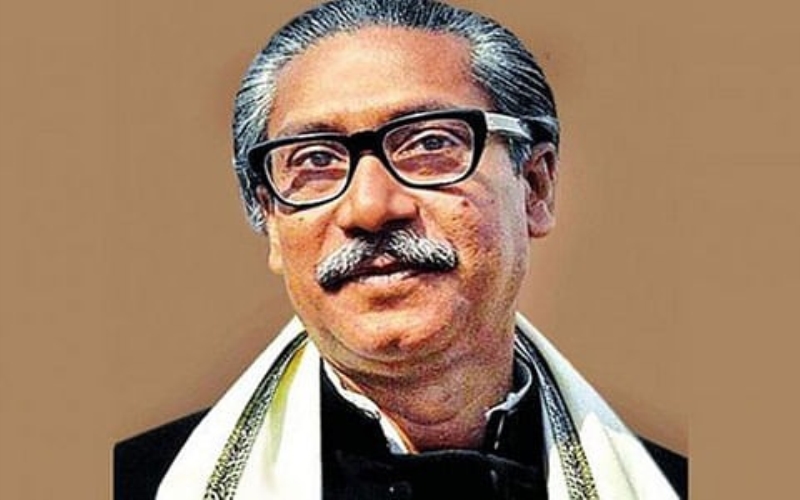
Achievements and Honors
Sheikh Mujibur Rahman’s life and contributions have been recognized globally:
- Title of Bangabandhu: In 1969, he was honored with the title “Bangabandhu,” meaning “Friend of Bengal.”
- UNESCO Recognition: In 2017, UNESCO included his 7 March 1971 speech in the Memory of the World Register.
- National Observances: 17 March, his birthday, is observed as a national holiday in Bangladesh.
- Mujib Year: To commemorate his 100th birth anniversary, Bangladesh declared 2020–2021 as “Mujib Year.”
- Memorials: The Bangabandhu Sheikh Mujibur Rahman Memorial Museum in Dhaka preserves his life’s story.
Why Sheikh Mujibur Rahman’s Legacy Matters Today
Sheikh Mujibur Rahman’s story is not just a chapter in Bangladesh’s history; it is a source of inspiration for generations. His leadership exemplifies the power of perseverance and dedication to a cause greater than oneself.
In a world where oppression and injustice still exist, Sheikh Mujibur Rahman’s struggle for equality, self-determination, and justice remains a guiding light. His life is a testament to the idea that one person can indeed make a difference.
Conclusion
Sheikh Mujibur Rahman’s life was a journey of remarkable achievements and profound sacrifices. From his humble beginnings in Tungipara to leading a nation to independence, his story is one of unparalleled courage and vision. As the Father of the Nation, he laid the foundation for a free and sovereign Bangladesh, earning his place in the hearts of millions.
Even after his assassination, his legacy continues to inspire not only the people of Bangladesh but also freedom fighters and leaders worldwide. Sheikh Mujibur Rahman’s symbolic net worth lies in his enduring impact and the values he stood for—justice, equality, and freedom.
